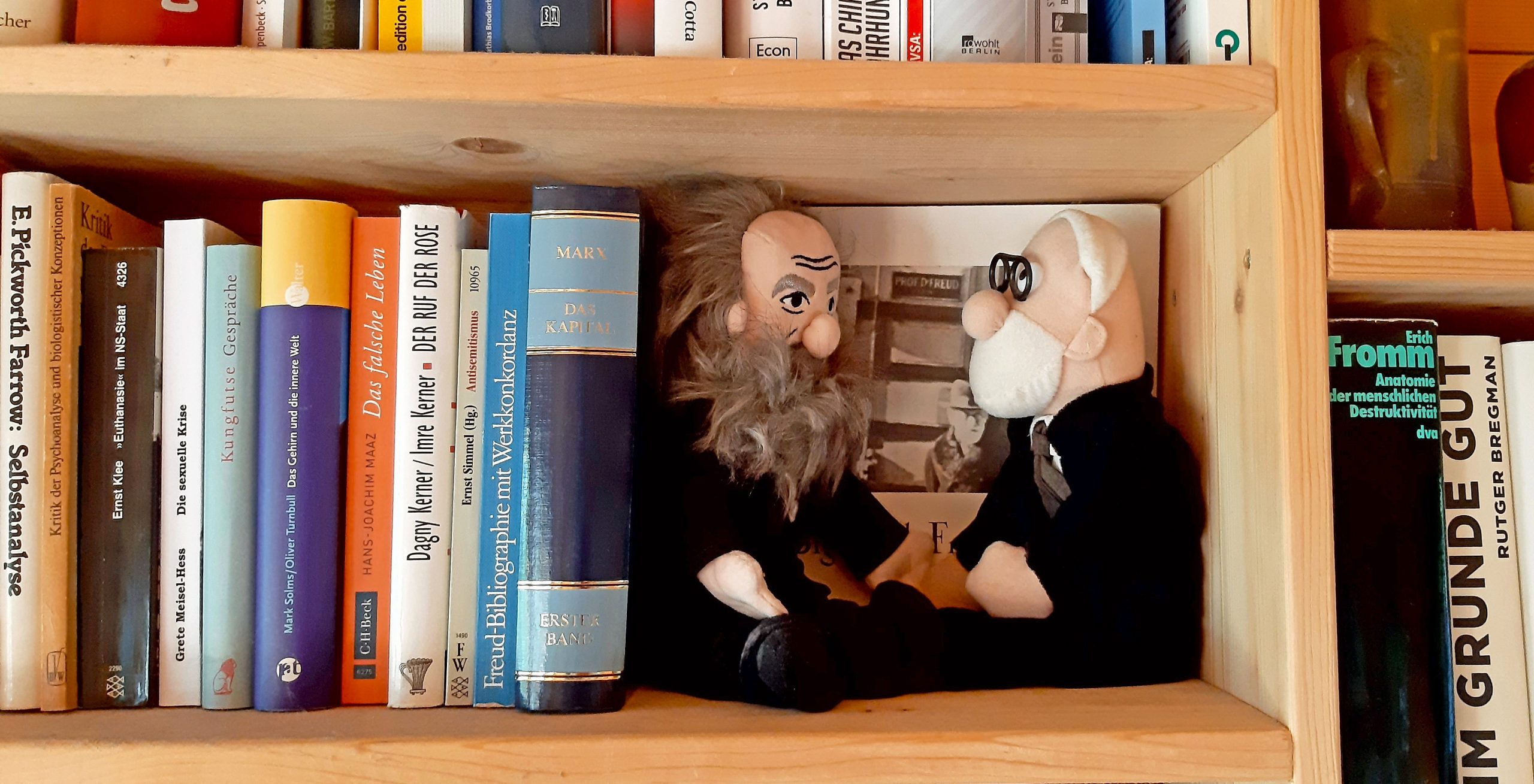
Expanded version of 29 July 2026
by Andreas Peglau
Download of the expanded version as pdf.
(Download of th earlier version)
*
Child Misery Under Capitalism
In “People as Puppets? How Marx and Engels Suppressed the Real Psyche in Their Teaching”, I explained why, in my view, no adequate solutions to the current national and international crises can be found in the theory of Karl Marx and Friedrich Engels. There, I also demonstrated—using his endorsement of child labor as an example—that Marx’s belief in progress could lead to inhumane conclusions.[1] I would like to build on that.
In the “Instructions for the Delegates of the Provisional Central Council” of the International Workingmen’s Association, written by Marx in 1866, it stated:
“We regard the tendency of modern industry to enlist children and adolescents of both sexes in the great work of social production as a progressive, healthy, and justified tendency, although the manner in which this tendency is realized under the rule of capital is an abominable one.”[2]
As Marx knew and documented on numerous occasions, every month child labor claimed the health or lives of thousands of children. In Capital as well, he cited a report on the fate of “many thousands of these small, helpless creatures” who had previously been torn from their parents’ care:
“Overseers were appointed to supervise their work. It was in the interest of these slave drivers to work the children to the utmost […]. They were driven to their deaths by excessive labor … they were whipped, chained, and tortured with the most exquisite refinement of cruelty; in many cases they were starved to the bone while the whip kept them at work … Yes, in some cases they were driven to suicide! … The beautiful and romantic valleys of Derbyshire, Nottinghamshire, and Lancashire, hidden from public view, became grim wastelands of torture and—often of murder! … The manufacturers’ profits were enormous.”[3]
Nevertheless, in 1875 Marx still considered a “general ban on child labor” to be
“incompatible with the existence of large-scale industry and therefore nothing more than a pious wish. Implementing such a ban—if even possible—would be reactionary, since, with strict regulation of working hours according to different age groups and other precautionary measures to protect children, the early combination of productive work with education is one of the most powerful agents of transformation in today’s society.”[4]
Marx must have known how futile adequate child protection was in the capitalism of 1875, especially within “large-scale industry.” Yet he gave priority to the future social transformation he hoped for over the real misery of children in his own time. Weiterlesen →