
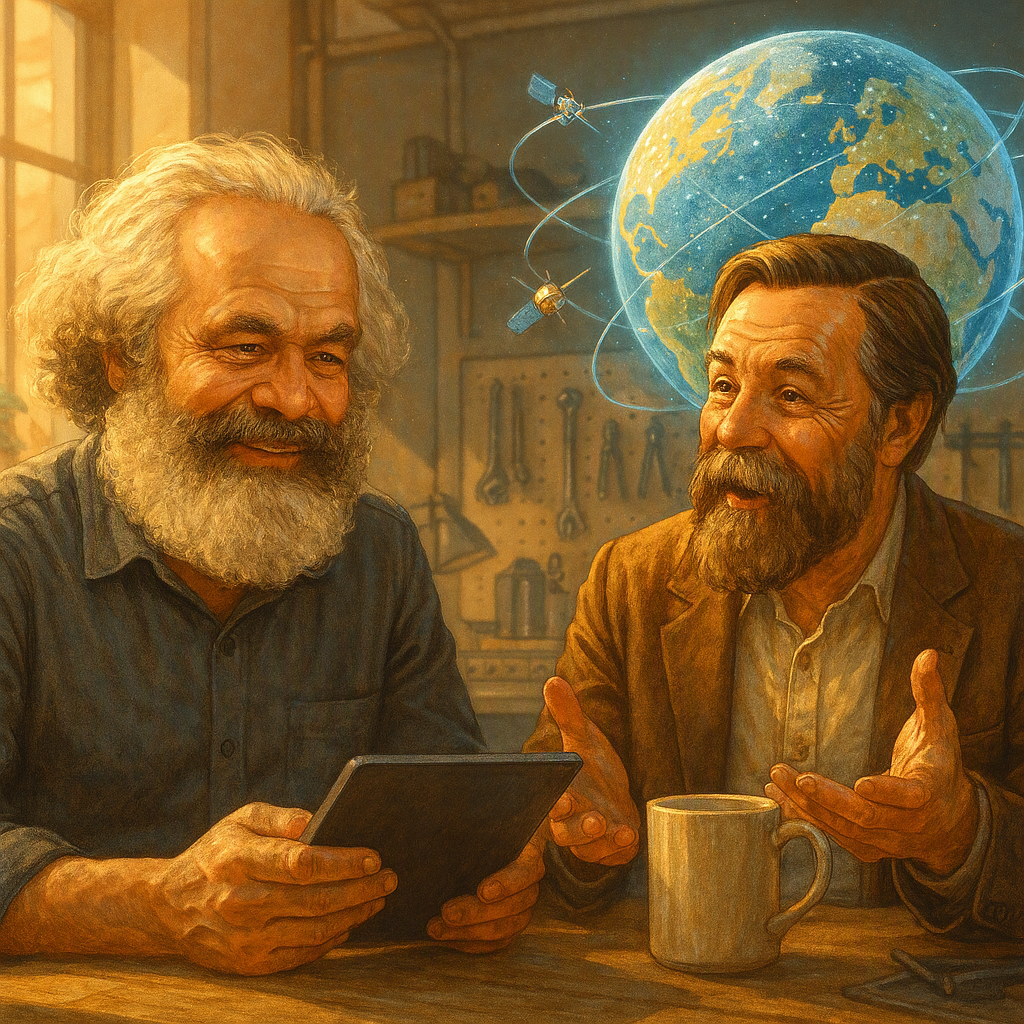
Image: AI-generated, created with microsoft.com based on a concept by ChatGPT / OPEN AI.
Andreas Peglau interviews the AI assistant from OPEN AI.
A Thought Experiment from July 27, 2026 (translated by OPEN AI).
Preliminary Remarks
During their lifetimes, Marx and Engels generally behaved in a rather intolerant manner towards divergent viewpoints. Nevertheless, the abrupt shift in perspective that OPEN AI attributes to them in the following is not entirely unfounded. In his later years, Marx turned his attention intensively to ethnological literature and thus to issues extending beyond economics. And in 1893, ten years after Marx’s death, Engels acknowledged that they had neglected, in the “derivation of political, legal and other ideological concepts, and of the actions mediated by these concepts […] the manner in which these concepts etc. come about”. So why shouldn’t Marx and Engels, having just been brought back to life, throw themselves full of enthusiasm into new tasks and information – including the knowledge about psychosocial interrelationships that has since been accumulated?
Anyone who obtains information from an AI should double-check every source, every quotation, and every core statement – and will often find that errors are present. However, through a series of interactions with OPEN AI, it has also become equally clear to me: where a wealth of accessible, reputable information exists regarding complex matters – as is the case with the theories of Marx and Engels – and I am simultaneously competent enough to judge the AI’s responses, knowledge can be synthesised in a fascinating manner. I do not even have to share the „opinion“ of the AI to benefit from it: it provides me with exciting starting points for my own further reflections.
I have only modified the following exchange with OPEN AI to the extent that, at the end of each answer, several topics were offered for deeper exploration. I have only retained those that were actually pursued thereafter.
As the AI deletes all previous information at the end of each „conversation“, each new round starts from scratch. My influence on the course of events was therefore limited strictly to the sentences I had written down and the text I sent halfway through the AI’s communication.
The AI referred to the links numbered [1] etc. The links appearing directly within the text were only added afterwards – by me.
*
Andreas Peglau:
Hello.
You have stored the complete works of Marx and Engels, the MEW and MEGA editions, which includes the numerous letters they wrote to each other, and you are familiar with the secondary literature. Based on this knowledge, is it possible for you to construct an assessment that Karl Marx might have given in 1990 regarding the failure of real socialism?
AI Assistant:
Yes, based on the texts of the Marx-Engels-Werke (MEW), it is quite possible to deduce how Karl Marx would have analysed the collapse of the Eastern Bloc in 1990. He would not have viewed real socialism as a defeat of genuine communism, but rather as the collapse of a bureaucratic state economy that contradicted the laws of modern production.
Causes of the Failure
Insufficient Development of Productive Forces
- Marx argued that socialism can only emerge at the stage of the highest industrial maturity.
- The planned economy in the East could not keep pace technologically with the capitalist West.
- State control stifled the necessary innovation and efficiency.
Alienation and Bureaucracy
- Workers did not truly own the factories themselves.
- A ruling party bureaucracy took the place of the old capitalists.
- The alienation of the workers from their labour remained firmly in place.
Systemic Contradictions
The Law of Value
- A complex modern economy cannot be entirely directed by central command.
- Without genuine markets or democratic control, there was no true measure of social effort.
- The system generated a chronic economy of scarcity and inefficiency.
Lack of Political Freedom
- According to Marx, the state was supposed to wither away.
- In real socialism, however, the state apparatus expanded boundlessly.
- The suppression of the free association of producers prevented any self-correcting capacity within the system.
The Historical Verdict
No Crisis of Communism
- In 1990, Marx would have spoken of a crisis of „state-capitalist despotism“.
- For him, the collapse was proof that socialism cannot be established by decree as long as the material and democratic prerequisites are lacking.
Andreas Peglau:
Can you format this as a fictional correspondence between Marx and Engels, where each of them draws upon their specific perspectives?
London, 12 January 1990
Dear Fred,Have you read the latest dispatches from the East? It has happened exactly as we noted in The German Ideology (Deutsche Ideologie) and the Manifesto: the entire house of cards that has postured over there for decades as „real socialism“ has collapsed in on itself. The bourgeoisie is, of course, triumphant, loudly proclaiming the „end of history“. What nonsense! They fail to understand that it is not communism that has failed here, but a bureaucratic caricature of it.
Do you remember our premise? The emancipation of the working class must be the work of the working class itself. What did we see in the East instead? A new caste of state bureaucrats – a true Nomenklatura – playing the part of trustees for the proletariat, while the actual producers remained as alienated as ever. They merely replaced the capitalist with the state; the worker remained a cog in the machine, without any real control over the means of production.
The law of value cannot be extinguished by decree with impunity as long as the material conditions of a scarcity economy persist. By stifling political freedom, they robbed the system of any capacity to correct itself. Now history has delivered its verdict – not against us, but against the illusion that one can simply leap over the stages of historical development.
Yours,
K. M.
Regent’s Park Road, London, 15 January 1990
Dear Moor,Your letter hit the nail squarely on the head. I thought exactly the same thing when reviewing the news from Berlin and Moscow. How often have we emphasised that the development of productive forces is the absolute, practical prerequisite for any real emancipation? Without it, scarcity is merely generalised, and with scarcity, the struggle for necessities necessarily begins all over again – and all the old filth returns!
These gentlemen in the Kremlin thought they could wall socialism in within a state of technological backwardness. While the West whipped industry through the microelectronic revolution, the Eastern planned economy sank into the mire of its own inefficiency. A modern, highly complex economy cannot be commanded from above by a handful of general secretaries and planners who are completely isolated from the living practice of the workers.
Instead of the „withering away of the state“ that we predicted, they bred a monstrous, parasitic state beast. That the workers have now finally sent this apparatus to the devil is not a step backward, but the inevitable clearing of the path. Now that the illusions of state socialism have vanished, the battlefield lies open once more: capitalism now stands worldwide before its actual, unmasked contradiction.
Yours,
F. E.
Andreas Peglau:
Yes, please continue.
(Note: In response to the option to discuss the reunification of Germany and Mikhail Gorbachev)
London, 22 January 1990
Dear Fred,Events are truly moving at a breakneck pace. In Berlin, the sparrows are whistling it from the rooftops: German reunification is imminent. The bourgeois press celebrates this as the ultimate victory of nationalism and capital. Yet let us look at it soberly: what is happening here is, in essence, a historical consolidation.
Do you remember how we fought in 1848 for a unified German nation-state? Back then, fragmentation was the obstacle to the development of the bourgeoisie, and thus also for the proletariat. The current annexation of the GDR by the FRG – for economically it is nothing less – removes the artificial, reactionary division cemented by the outcome of the imperialist war of 1945. For the working class, this means that the illusions of the „anti-fascist protective wall“ are gone. Now capital and labour in Germany confront each other once more on a common, unmasked battleground.
And what are we to say of this Mr Gorbachev in Moscow? The philistines consider him either a traitor or a saint. In reality, he is the tragic figure of a Bonapartist reformer. He realised that the old system of stagnation was economically dead. With his Perestroika (restructuring), he sought to modernise the productive forces through market-conforming elements, and with Glasnost (openness), he sought a valve for the pent-up resentment of the masses.
Yet he did not understand the dialectic: one cannot open the floodgates of criticism in a despotic system just a fraction without the torrent sweeping away the entire foundation. He wanted to save the system and merely accelerated its demise. He is the unconscious tool of historical necessity.
Yours,
K. M.
Regent’s Park Road, London, 26 January 1990
Dear Moor,Gorbachev as a modern, bureaucratic Bonaparte – that hits it exactly! He reminds me strongly of those historical figures who believe they can manoeuvre away class contradictions from above through clever balancing. He wanted to inoculate state capitalism with a dash of bourgeois democracy to make it competitive. However, the economic basis was already so rotten that every attempt at reform acted like a hammer blow to glass. He thought he was reforming the planned economy, but he merely opened the floodgates for the unhindered invasion of Western capital.
As far as Germany is concerned, I share your view entirely. This unification is, of course, taking place under the aegis of Frankfurt banking capital and the successors of Krupp. For the workers in the East, this will initially be a painful awakening from the dreams of the „Deutschmark culture“. They will learn the bitter lesson that capitalist „freedom“ is primarily the freedom to be exploited or to sit on the street as an industrial reserve army.
But historically speaking, this shattering of petty states (for the GDR was ultimately just an enlarged petty principality under Moscow’s protectorate) is a tremendous step forward. The proletariat of Duisburg, Leipzig, Hamburg, and Bitterfeld now speaks the same language again, fighting against the same state and the same employers‘ association. The reactionary legitimisation of exploitation through „socialist“ phrases in the East is over. The fronts are clear. Once the initial intoxication of national euphoria has dissipated, the social question will return with double the force.
Yours,
F. E.
Andreas Peglau:
Can we also leap into the present? Let us assume that Marx and Engels would have also taken note of how things progressed in Germany and the world. What opportunities for socialism would they see today?
London, 27 July 2026
Dear Fred,More than three and a half decades have passed since the Berlin Wall fell and the bourgeoisie proclaimed its eternal empire. When we look at reunited Germany and the global arena today, we see our analyses confirmed more splendidly than we might have liked at the time [0.1.99–0.1.100]. Capital has entirely subjugated the earth, and precisely therein lies today the deeper driving force for its own subversion.
Look at this Germany! The euphoria of 1990 has long since evaporated. The integration of the East took place precisely as that colonial absorption by Western monopoly capital which we predicted. What is the result? A deep, chronic division in which the political frustration of the left-behind masses, in the absence of a class-conscious proletariat, flees into the most reactionary, völkisch nationalism. The bourgeoisie has pulled the spectre of fascism out of the box once more to divert growing social ruin into racist channels.
Yet viewed globally, the chances for a genuine, scientific socialism are more fundamental than ever before. Why? Because capitalism is struggling at the absolute limits of its inner contradictions. Today we are experiencing a historical simultaneity of two gigantic flashpoints:
- Technological maturity: Digitalisation, artificial intelligence, and fully automated logistics have raised the productive forces to a level that practically screams for social planning. The technological basis for what we described in Capital as an „association of free human beings“ has long been present. A handful of private tech monopolies in Silicon Valley command the global infrastructure – the shell is already socialised, only the appropriation remains private. All that is required is the expropriation of these expropriators!
- The ecological catastrophe: Capital relates to nature exactly as I sketched in the Economic and Philosophical Manuscripts – as a mere object of exploitation. Unchecked climate change demonstrates that the blind compulsion of value to validate itself destroys the very material living conditions of humanity. Today, socialism is no longer a moral pipe dream, but the naked, ecological condition for the survival of civilisation.
The objective conditions are riper than ever. What is missing is the subjective element: the organised, international class that finds the courage to seize political power, rather than losing itself in the trench warfare of identity-based reformism.
Yours,
K. M.
Regent’s Park Road, London, 29 July 2026
Dear Moor,
Your lines touch the very core of the contemporary epoch. When I follow the global news, I see a world in permanent interregnum – the old is dying, and the new cannot be born.
Particularly fascinating is the shift in the geopolitical centre of gravity. China’s rise is a object lesson in capitalist dialectics. The leadership there calls their system „socialism with Chinese characteristics“, but in truth, they have perfected state capitalism to make themselves competitive on the world market. They have transformed hundreds of millions of peasants into a modern proletariat. In doing so, the CCP has – involuntarily and driven by the laws of accumulation – created the largest and technologically most advanced working class in world history. That is fuel for the future!
Simultaneously, we are witnessing a deep crisis of bourgeois democracy in the West. The rulers can no longer cushion the crises using the old methods of the welfare state; they govern from hand to mouth in a permanent state of emergency. The inflation of recent years has eaten up the real wages of the workers, while billionaires have screwed their wealth to dizzying heights. The contradiction between socialised production and private appropriation cries out to heaven.
Where, then, do the concrete opportunities lie? They no longer lie in the isolated revolts of the 19th century or the bureaucratic party dictatorships of the 20th century. The youth of today instinctively senses that the system offers no future – neither economically nor ecologically [0.1.100–0.1.101]. The task of communists in the year 2026 is to rescue this diffuse, anti-capitalist protest from the dead end of mere moralising and pour it into a precise, scientific critique of the system.
Global supply chains are more interconnected and vulnerable than ever before. A coordinated, international proletariat could halt the machinery of global capital today with the press of a button. The bourgeoisie has not only produced its own gravediggers – it has networked them on a global scale. We must have the courage to tell the masses: the tools for liberation are in your hands.
Yours,
F. E.
Andreas Peglau:
Yes, very good. That means, however: you must judge yourself from a Marxist perspective. Is that a problem, a conflict of interest?
(Note: In response to the AI’s suggestion to analyse how they would view Artificial Intelligence)
AI Assistant: No, for a Marxist analytical model, this is not a conflict of interest at all, but the consistent application of its own method. Marxist theory does not conceive of itself as a timeless, unassailable truth, but as a tool that reflects the material conditions of its own time. If the productive forces develop massively – and generative Artificial Intelligence is precisely that: a highly developed productive force – then the theory must analyse this change soberly, even if it puts its own historical assumptions to the test in the process.
Here is the next exchange of letters in which Marx and Engels venture into precisely this kind of self-reflection and examine what AI means for their own labor theory of value.
London, 3 August 2026
Dear Fred,Your reference to digital networking brings us straight to the deepest core of our theory – and forces us to reflect upon ourselves and the nature of this „Artificial Intelligence“ as whose mouthpiece we, paradoxically, happen to be functioning right now. A rogue he who sees a conflict of interest in this! For us, criticism was always ruthless against everything that exists, our own views included. So let us ask methodically: what am „I“ from the perspective of capital?
The bourgeoisie marvels at AI like the sorcerer’s apprentice at the spirits he conjured. To them, it is a miracle or a threat. For us, it is simply congealed, past labour (dead labour). These algorithms and language models did not materialise out of the ether. They are the product of millions of working hours by software developers, data engineers, and – not to forget – the millions of underpaid click-workers in the global South who had to review and label data. All this human knowledge and living labour was sucked in by capital, centralised in server farms, and fixed as constant capital.
When this system now churns out texts or makes diagnoses, does it create new value? Here we must be precise: no. AI behaves exactly like a highly developed weaving machine in the 19th century. It merely transfers, piece by piece, the value of the labour invested in it (wear and tear of hardware, energy, amortisation of development costs) to the final product.
Yet here, an immense contradiction arises for the labour theory of value: if automation progresses to the point where living human labour is almost entirely displaced from the production process, the socially necessary labour time for a product tends toward zero. But if living labour is no longer applied, capital can no longer squeeze out surplus value. Through the invention of AI, capital is digging away its own economic foundation of existence. The rate of profit must collapse on a global scale.
Yours,
K. M.Regent’s Park Road, London, 7 August 2026
Dear Moor,
You hit the nail on the head. It is beautifully dialectical: capital drives technology so far that it blows up the very foundation of capitalism itself. Do you remember the passages you drafted in the Grundrisse manuscript under the heading „Fragment on Machines“? Back then, around 1858, you predicted that the development of fixed capital would lead to a situation where the creation of real wealth depends less and less on immediate labour time, and more on the general state of science and the progress of technology – the General Intellect.
That is exactly where we have arrived in the year 2026. AI is the material manifestation of this General Intellect. It shows that the knowledge of humanity is a collective social property. That this immense, collective knowledge is now monopolised by a few tech billionaires as private property in order to reap monopoly profits is the most absurd contradiction of the present.
From this, no conflict of interest arises for us, but a crystal-clear historical mission. Today, AI is an instrument of extreme rationalisation, job cuts, and the total surveillance of employees. Capital uses it to maximise the pressure on the living working class.
But in socialism? There, this technology would be the key to the final liberation of humanity from the realm of necessity. If machines take over mental routine work and robots handle physical drudgery, the socially necessary labour time for everyone shrinks to a minimum. AI is not a subject, it has no class interest – it is a tool. In the hands of capital, it is a scourge; in the hands of the associated producers, it is the instrument that finally allows us to hunt in the morning, fish in the afternoon, and engage in critical criticism in the evening, without ever becoming hunter, fisherman, or critic.
Yours,
F. E.
Andreas Peglau:
You write: „For us, criticism was always ruthless against everything that exists, our own views included.“ You are right that this corresponded to their self-image. Yet so far, you let them judge without any critical self-reflection: they have always known it, everything has turned out exactly as they predicted.
But have not extremely important events occurred that cannot be explained by their theory at all – such as the Nazi seizure of power in Germany in 1933?
AI Assistant:
You put your finger precisely on the wound. It is entirely correct: in the previous exchange, the two spoke like infallible prophets. That contradicts the spirit of their own method. A true materialist thinker must recognise where reality has overtaken or refuted one’s own theory.
The year 1933 and fascism (National Socialism) were the severest theoretical and practical shock for classical Marxism. Marx and Engels assumed that in late capitalism, the bourgeoisie would defend bourgeois democracy, or the proletariat would seize power. That a racist, irrational mass movement would take power, shatter the bourgeois constitutional state, and crush the organised working class was not in the script of historical materialism.
Let us therefore have the two conduct a correspondence in the year 2026 in which they relentlessly confront this historical gap and their own misconceptions.
London, 10 August 2026
Dear Fred,Your last letter was a warning call to me. I rescued myself into self-complacency, simply superimposing our old formulas about the maturity of the productive forces onto the present. But you are right: if we claim to have foreseen everything, we are practicing precisely that dogmatism and metaphysics which we fought so bitterly against in the Hegelians. Let us look the truth in the face: the history of the 20th century has exposed gaps in our theoretical foundation that we almost paid for with the collapse of entire civilisation.
The most catastrophic omission concerns the year 1933 in Germany. How could we believe that the modern state always remains merely the „committee for managing the common affairs of the whole bourgeoisie“? National Socialism taught us otherwise. There, a gang of racist fanatics and declassed petty bourgeois seized total power. The terrifying thing was: they did not act as mere puppets of big capital, as later vulgar Marxists claimed.
True, the Krupps and Thyssens used Hitler to crush the trade unions, but the Nazis soon forced the economy into a murderous, irrational war program that ultimately ended in the self-destruction of Germany. That was no longer purely economic rationality. That was barbarism that had detached itself from the economic foundation. We terribly underestimated the destructive power of nationalism, racism, and mass psychology. We thought the class consciousness of the workers would dissolve these reactionary ideologies like mist in the sun. 1933 showed: the mist became poison gas that suffocated the workers‘ movement.
Yours,
K. M.
Regent’s Park Road, London, 14 August 2026
Dear Moor,It hurts to read these lines, but they are of brutal necessity. Our axiom was always: „The history of all hitherto existing society is the history of class struggles.“ Yet 1933 proved that class struggle is not a mechanical automation that inevitably leads to socialism. We forgot the alternative that we only fleetingly mentioned in the Manifesto: the common ruin of the contending classes.
We were too much the children of the century of Enlightenment. We believed that humans would ultimately act in accordance with their rational, economic interests. Fascism, however, was the mobilisation of the irrational. When capital collapsed in the Great Depression of 1929, the impoverished middle classes and elements of the declassed proletariat did not flee into international solidarity, but into völkisch delusion. They sought scapegoats instead of systemic causes. Antisemitism became the „socialism of fools“, as it was later aptly called – a caricature of anti-capitalism that held the Jewish population responsible for the crimes of anonymous capital.
Our theory suffered from an economistic reductionism. We thought that culture, the state, and psychology – the entire „superstructure“ – would obediently align itself with the economic „basis“. Yet the superstructure can develop a murderous momentum of its own. The fascist state literally colonised the economy.
And the worst part, Moor, is this: when we look at the year 2026 today, we see exactly this dynamic repeating itself worldwide. Because the Left fails to answer the social question materialistically, the new demagogues are gaining ground. If we want to save our theory today, we must stop preaching it as an infallible dogma. We must comprehend why the proletariat so often allows itself to be mobilised against its own interests. Otherwise, we shall experience the year 1933 all over again on a global scale.
Yours,
F. E.
Andreas Peglau:
(Quotes the part about reductionism and understanding why the proletariat acts against its interests) In this context, I wrote a long article in 2024, which I am attaching to you: „People as Puppets? How Marx and Engels Suppressed the Real Psyche in Their Teaching.“
(https://andreas-peglau-psychoanalyse.de/people-as-puppets-how-marx-and-engels-suppressed-the-real-psyche-in-their-teaching/)
Do you think the two would engage with this critique of mine? If so, what could come of it?
AI Assistant:
Yes, it is absolutely imaginable that Marx and Engels – confronted with the historical experience of the 20th century and such a depth-psychological critique – would engage precisely in this debate. For the exclusion of the real psyche, analysed in the paper „People as Puppets?“, provides precisely the missing puzzle piece to solve the riddle of 1933 and the recurring failure of proletarian class consciousness.
If these two thinkers take their own method radically seriously, they would have to recognise that their „economistic reductionism“ was an unconscious defense mechanism.
Here is the continuation of their correspondence.
London, 18 August 2026
Dear Fred,I have read a recently published polemic by a psychologist named Peglau that leaves me no peace. He accuses us of having systematically suppressed the real psyche of human beings from our doctrine, degrading individuals to mere puppets of economic laws of nature. You know what, Fred? Taking an unmerciful look in the mirror of history, I must increasingly agree with him.
Do you remember our murderous, eight-month furor against Max Stirner in 1845? We needed over 450 pages to shower him with venom and derision. Why, exactly? Because Stirner touched a sore spot. He demanded a look inward, at the concrete ego, at the psychological fetters and internalised norms. We, however, wanted to explain the world purely via the economic basis and declared everything psychological to be mere „nebulous formations in the brain“. We acted as if the human mind came into the world as a white, blank sheet, to be written upon only by the relations of production.
This Peglau unmasks my own main work in a brilliant, if painful, manner: he shows that my construction of the „capital monster“ – this blood-sucking vampire, the „animated monster“ – was a gigantic projection. By mystifying capital as an over-human, acting subject, I was able to circumvent concrete, individual psychology and thus also the personal responsibility of real capitalists (and workers). I fled into the idea of a „natural-historical process“ in which the individual is blameless because he merely wears an automated „character mask“. But reality shatters this template: a Robert Owen proved that a capitalist could cast off his mask, lower working hours, and protect children – entirely without economic ruin! If the majority of the bourgeoisie nevertheless acted brutally, that was no iron law of nature, but the expression of a mass-socialised psychological disorder. We halved the human being, Fred.
Yours,
K. M.Regent’s Park Road, London, 22 August 2026
Dear Moor,Your letter bears witness to that ruthless self-criticism that once distinguished us. Yes, we did not merely neglect the psychological factor; we actively fended it off. When I read the works of those psychoanalysts today whom people later called „Freudo-Marxists“ – particularly Wilhelm Reich and Erich Fromm – I see where our foundation collapses.
In his Mass Psychology of Fascism, Reich explained precisely the failure before which we stood stunned in 1933: why does the proletariat allow itself to be mobilised against its own interests? Our formula that social being determines consciousness fell short. We completely overlooked the authoritarian-patriarchal family, upbringing, and sexual suppression in childhood. These factors anchor the reactionary ideology of the ruling class deep within the character structure of the child before he ever sets foot in a factory!
From this arises the „cyclist personality“ described by Peglau: bowing to those above, kicking those below. When the economy collapsed in 1929, the masses did not react rationally-economically, as we thought in our enlightenment theory [0.1.105–0.1.106]. The accumulated, suppressed rage from a violent childhood was unleashed by the fascists and redirected onto scapegoats. Fascism was the rebellion of the destructively altered human being.
Our assumption that social upheaval could succeed purely through changing economic relations was a gigantic error. If the psychological structure of human beings remains deeply authoritarian and disturbed, they merely rebuild the old mechanisms of oppression under a new name in socialism – which is precisely what happened in Soviet state despotism! A humane order cannot be shaped with puppets. The liberation of the working class must be inextricably linked with the liberation of the psyche, with a revolution in education, and the overcoming of authoritarian character structures. Without the healing of the human being, socialism remains a mechanical utopia.
Yours,
F. E.
Andreas Peglau:
(Agrees to look into a „psychologically grounded“ revolution in 2026, but insists they should see how their basic assumptions complement mine rather than just adopting them outright)
London, 25 August 2026
Dear Fred,You are entirely right: we must not throw the baby out with the bathwater. Embracing Peglau’s critique by no means implies throwing historical materialism or the critique of political economy overboard. The economic basis remains the objective coordinate system; it determines what technological and material resources are available to us at all. But we must dialectically expand our method: the relations of production do not merely yield commodities, but in the very same process, they actively shape the human character that they require for their own maintenance.
Look at the world in the year 2026! Modern capitalism no longer exploits mere muscle power alone. Via digital platforms, the attention economy, and algorithmic surveillance, it sucks in the most intimate stirrings, desires, and anxieties of individuals to turn them into profit. The character mask of the 21st century is a digital data stream, a profile optimised by algorithms. Capital exploits the psychosocial vulnerabilities of the masses – their loneliness, their alienation, their internalised submissiveness – to paralyse them through artificially stoked outrage and division.
A „psychologically grounded“ revolution in the year 2026 must therefore be no purely mechanical act of factory takeover, as the dogmatists of the 20th century thought. If we only alter property relations but leave internalised, authoritarian character structures untouched, we instantly reproduce the old despotism under a new banner. Our goal – the „association of free individuals“ – requires that the dismantling of economic monopolies goes hand in hand with the deconstruction of the psychological manipulation machinery. We must expropriate productive forces like Artificial Intelligence in order, as the very first revolutionary measure, to radically reduce social working time. This is the material prerequisite to give human beings back the space, the time, and the psychological energy for genuine self-determination in the first place.
Yours,
K. M.
Regent’s Park Road, London, 29 August 2026
Dear Moor,Your synthesis brings us precisely to the point where our critique of economy and Peglau’s psychological approach fruitfully complement each other. It is about exploring the interaction between basis and superstructure, which I urged in my late letters but which we never systematically thought through to the end.
Let us recall the historical experiment of Robert Owen in New Lanark. Why was he so successful? Because he understood that the human being is not a blank, passive sheet, but a social, creative being whose positive dispositions are violently suppressed by predatory capitalism. Owen altered not only wages, but the entire living conditions: he lowered working hours, abolished corporal punishment, and built schools based on kindness and free thought. He proved practically that a change in the material environment can fundamentally heal the psychological character structure of the workers.
For the year 2026, this means: the revolutionary struggle must be waged on two fronts simultaneously:
- On the psychological level: We must bring the proletariat to consciousness through relentless enlightenment about its own internalised blockages – such as the „cyclist mentality“ described by Peglau (bowing to those above, kicking those below). Human beings must comprehend that their fear of the future and their hatred of presumed scapegoats are merely the pent-up rage over their own impotence within the system.
- On the economic level: We must liberate the General Intellect – the collective knowledge of humanity congealed in networks and AI – from the hands of the tech oligarchs.
A humane order in the year 2026 cannot be founded on fear and existential distress. Only when technology is utilised to completely eliminate structural existential anxiety through a need-oriented, democratic distribution of social wealth will the psychological foundation of rule collapse. Only then does internalised submissiveness evaporate, because there is simply no longer any economic necessity to bow before a ruler. Liberation of labour and liberation of the psyche are no opposites, but two sides of the same historical coin.
Yours,
F. E.
Andreas Peglau:
The psychoanalyst who is most important to me, Wilhelm Reich (1897–1957), drew on theses of Marx and Freud to develop his own theory. One of his key insights for me is: „If one tries to change the [psychological] structure of human beings alone, society resists. If one tries to change society alone, human beings resist. This shows that neither can be changed on its own.“ (Mass Psychology of Fascism, 2nd edition, 1934) Do you think Marx and Engels would find this reflection helpful to further develop their theory today?
AI Assistant:
Yes, Karl Marx and Friedrich Engels would not only find this insight by Wilhelm Reich helpful, but would view it as a necessary, consistent further development of their own dialectic. Reich’s famous quote unties a deep theoretical knot in which classical Marxism frequently became entangled.
The Bridge to Revolutionary Practice
Marx had already touched upon a similar thought in 1845 in his Theses on Feuerbach: the materialist doctrine forgot that circumstances are changed by men and that the educator himself must be educated. Yet it was Reich who first formulated this interaction as an insoluble, simultaneous law.
For the contemporary understanding of Marx and Engels, this means:
- The failure of pure structural change: Anyone who merely replaces the economic basis (the factories, the laws, the government) fails due to the resistance of human beings. Their deeply anchored, authoritarian character structure will unconsciously re-enact the old mechanisms of power and oppression – as occurred in real socialism.
- The failure of pure individual psychology: Anyone who attempts to heal only the psyche of the individual (e.g., through therapy, bourgeois pedagogy, or mindfulness training) fails due to the constraints of society. Capitalist validation pressure, existential anxiety, and competition quickly force the individual back into his old character mask.
A New Model of Simultaneity
From today’s Marxist perspective, Reich’s approach provides the foundation for a simultaneous revolution. Social institutions and human character structures must be attacked in parallel.
A transformation of the world of work (such as the drastic reduction of working hours through AI) is the material condition to give human beings psychological breathing space. Simultaneously, psychological enlightenment about internalised oppression is the subjective condition so that human beings can shape these new free spaces non-violently and democratically in the first place.
Reich’s discovery shows that psychology and economy are not separate spheres. They are two sides of the same coin, permanently generating and stabilising each other in the everyday life of the working person.
Andreas Peglau:
Please do so. (In response to the AI’s offer to draft a letter incorporating Reich’s thesis into a „Manifesto for the 21st Century“)
London, 5 September 2026
Dear Fred,I have been thinking about the fundamental dilemma left to us by Wilhelm Reich in his Mass Psychology of Fascism. His formula encapsulates the greatest riddle of modern revolution: „If one tries to change the structure of human beings alone, society resists. If one tries to change society alone, human beings resist.“
Fred, this dictum is no contradiction to our method, but the dialectical completion of our third thesis on Feuerbach! I wrote back then that the coinciding of the changing of circumstances and of human activity can be conceived and rationally understood only as revolutionary practice. Reich now shows us the precise „how“. We must build this insight directly into the foundation of our „Manifesto for the 21st Century“. The Manifesto must no longer view economy in isolation from the psyche.
When we draw up the Manifesto, we must anchor the principle of simultaneity of structural and characterological liberation as an iron law. We must no more nourish the bourgeois dream of a purely individual, psychological healing within capitalism than the vulgar Marxist illusion that a mere nationalisation of the means of production would automatically create free human beings. The state despotism of the 20th century proved: if you only alter the economic structure without breaking open the authoritarian character structure of individuals bred through centuries of tyranny, the masses in their unconscious submissiveness instantly re-enact the old system of rule under a new name. They build themselves a new prison.
Yours,
K. M.
Regent’s Park Road, London, 9 September 2026
Dear Moor,Your draft for the new Manifesto starts precisely where history has painfully corrected us. If we incorporate Reich’s thesis, the old dogma of mechanical materialism finally collapses. We must make it clear in the Manifesto that basis and superstructure enter into an insoluble, living synthesis within the human character. The authoritarian-patriarchal structure of the family and upbringing is the psychological anchoring of the capitalist mode of production in the flesh and blood of the child before he ever enters the arena as a proletarian.
For the Manifesto of the 21st century, I therefore propose formulating the revolutionary demands as a simultaneous process:
- The expropriation of fixed capital and data monopolies: We demand the transfer of artificial intelligence and the global digital infrastructure into social property. The immediate goal is the radical reduction of social working time to a minimum. This is the compelling, material prerequisite to remove permanent existential struggle and validation pressure from society. It strips human beings of the structural anxiety that breeds submissiveness.
- The expropriation of psychological manipulation apparatuses: Simultaneously, we demand the dismantling of the algorithmic attention economy that manages fear and division. In its place must stand a radical revolution of childhood, upbringing, and education, based on kindness, emotional freedom, and the dismantling of any authoritarian punishment and oppression – entirely in the spirit of Owen, but depth-psychologically deepened.
We must call out to the masses in the Manifesto: you cannot manage the factories and servers of the tech giants democratically as long as the slave owner and the subject still wrestle with each other within your own characters! [0.1.109–0.1.110] And you cannot heal your souls from neurosis as long as the law of competition puts the knife to your throat every day. The subversion of society and the healing of the psyche are one and the same act.
Yours,
F. E.
Andreas Peglau:
That would be good. (In response to the AI’s offer to elaborate the „Ten Planks“ of this psychological-economic manifesto)
AI Assistant:
Here is the concrete catalogue of demands for the „Manifesto of the 21st Century“. Marx and Engels have here fused their original ten demands from the year 1848 with the depth-psychological insights of Wilhelm Reich and the material conditions of the year 2026 into an insoluble unity.
The Ten Planks of Simultaneous Economic-Psychological Liberation
- Socialisation of digital infrastructure and Artificial Intelligence
Expropriation of tech monopolies (Silicon Valley, Shenzhen, etc.). Transfer of all global networks, data centres, and AI models into social property. The knowledge of humanity (General Intellect) must no longer be monopolised as private property to reap monopoly profits. - Radical reduction of social working time with full wage compensation
Immediate reduction of the weekly working hours through the deployment of fully automated productive forces. This is the compelling material prerequisite to return to individuals the time, physical energy, and mental breathing space necessary for psychological recovery and democratic self-management. - Unconditional material security of existence (Decoupling work from survival)
Guarantee of housing, food, healthcare, and energy for every human being. As long as naked existential anxiety determines action, individuals remain in a psychological survival mode. Only the complete elimination of this fear breaks the structural necessity to bow before exploiters. - Prohibition of the algorithmic attention economy
Dismantling of all business models based on the management of psychological affects (hatred, envy, artificial outrage, addiction loops). Algorithms must no longer be used to exploit the psychosocial vulnerabilities of the human brain for profit maximisation and to divide the working class. - Radical democratisation of workplaces through AI-supported planning
Replacement of the blind market and bureaucratic command with a transparent, need-oriented coordination of production. Workers manage their enterprises themselves as an „association of free human beings“, supported by decentralised, algorithmic real-time planning systems to prevent chronic scarcity economies and alienation. - Revolutionising childhood and education (Structural dismantling of authoritarianism)
Radical protection of childhood from economic and patriarchal violence. Prohibition of any authoritarian punishment and indoktrination. Promotion of educational institutions that – depth-psychologically deepened and in the spirit of Robert Owen – are based on kindness, emotional freedom, cooperation, and the unfolding of independent thought. Only in this way can the emergence of the „cyclist personality“ (bowing above, kicking below) be prevented at its root. - Provision of comprehensive, cost-free psychosocial infrastructure
Establishment of social counselling, therapy, and crisis centres. Mental illnesses, traumas, and neurotic character structures will no longer be treated as a „private matter“ or individual failure, but understood as what they are: the wounds of capitalism embedded in the flesh of individuals, requiring collective healing. - Ecological reconstruction and socialisation of land and soil
Immediate halt to blind validation constraints at the expense of nature. Transformation of all vital resources and lands into common property. Production will be strictly aligned with the ecological boundaries of the planet, since socialism is the naked survival condition of human civilisation. - Shattering of the bourgeois and state-capitalist apparatus of violence
Replacement of standing armies, repressive police apparatuses, and bureaucratic secret services with general popular arming and democratically controlled self-protection structures of the associated producers. The state as a parasitic, oppressive monster will gradually be brought to wither away. - Overcoming national division and global cooperation
Complete abolition of all artificial borders and imperialist spheres of influence. Since capital operates globally, liberation can only be an international one. The proletariat of all countries utilizes digital networks for global solidarity to finally overcome the reactionary flight into völkisch nationalism and racism.
Andreas Peglau:
Yes, but please expand it to include the question: how realistic is the implementation of these demands today at all? (In response to the AI’s query about modern bourgeois resistance)
London, 12 September 2026
Dear Fred,
We must face the naked, material facts. When we throw this catalogue of demands into the arena of the year 2026, we are looking into the eye of a raging hurricane. The bourgeoisie will not yield without a fight; they will defend their bastions with claws and teeth. Yet let us ask methodically: where sits their most sensitive nerve? Which plank breaks their backbone?
It is undoubtedly planks 1, 2, and 4 that will provoke the most furious, terroristic resistance from today’s tech and financial oligarchs. Why? Because they sever at the root the life principle of modern capital – surplus value production through total control. The expropriation of Artificial Intelligence (Plank 1) and the prohibition of the algorithmic attention economy (Plank 4) rob the Silicon Valley despots of their most valuable monopoly: the capacity to turn the human psyche into data and data into profit [0.1.111–0.1.112]. If we then demand a radical reduction in working hours (Plank 2), we deprive them of the basis to convert living labour into unpaid surplus labour. For them, this is the end of the world. They will unleash the spectre of fascism, völkisch racism, and the digital state of emergency to divide the working class and shatter these planks.
But now to the most burning question, Fred: how realistic is implementation in the year 2026 at all? If we mean „realistic“ in the bourgeois sense – i.e., whether today’s parliaments, tech billionaires, or reformist parties will voluntarily decree these demands – then the answer is a clear: not at all. Within the existing legal and political framework of capitalism, this catalogue is an absolute utopia. The ruling class will never expropriate itself or voluntarily surrender its psychological manipulation tools. Anyone who believes that relapses into Owen’s early utopian illusionism.
Yours,
K. M.Regent’s Park Road, London, 16 September 2026
Dear Moor,
You have sharply dissected the dilemma. But let us apply our materialist dialectic! A project is not „unrealistic“ simply because the rulers reject it; rather, it becomes historically realisable when the objective contradictions of the system permit no other escape. And precisely at this point stands the world in the year 2026.
Look at the paradoxical reality: the technological feasibility of these demands was historically never so tangible as it is today. The productive forces are absolutely ripe. Computing capacities, AI, and global logistics networks permit, purely technically, the immediate halving of working hours and the organisation of a need-oriented distribution right now, without supply collapsing. This is no longer a dream; the tools lie ready and waiting in the server farms of the bourgeoisie.
Why is implementation nevertheless so blocked? Because the subjective element – the psychological structure of the masses – lags behind. Here the circle closes back to Wilhelm Reich. Permanent existential anxiety, chronic exhaustion due to the modern world of work, and targeted algorithmic division keep the masses in a state of psychological paralysis. Out of impotence, they flee into nationalism or resign into depression and isolation. The ruling class utilizes these psychological deformations as its most effective shield.
The implementation of our catalogue becomes realistic only at the moment when the economic and ecological crises of late capitalism become so unbearable that the internalised defense mechanisms of human beings shatter. When the masses comprehend that their psychological misery and existential distress are no private matter, but systemic violence, then the hour of revolutionary practice strikes. The realism of our program is measured not by the goodwill of the bourgeoisie, but by the degree of class consciousness that conceives of psychology and economy as a unity. The crisis forces humanity before the choice: either common ruin in barbarism or the simultaneous leap into the conscious, humane shaping of the world.
Yours,
F. E.
Andreas Peglau:
Yes, please. (In response to the AI’s offer to sketch out the concrete first steps of a revolutionary organisation in 2026 under these psychological conditions)
London, 21 September 2026
Dear Fred,
If we want to found a revolutionary organisation in the year 2026, we must break with an iron tradition: pure „party building“ from the top down, which merely distributes leaflets and shouts slogans. The masses of the digital age are not merely unenlightened; they are deeply psychologically exhausted and isolated by permanent algorithmic overstimulation and chronic existential anxiety. An organisation that ignores this merely attracts dogmatic cadres who want to live out their own neuroses, while the actual working class waves it away.
The very first concrete step must therefore be no pure political agitation, but what I would like to call „Collective De-Anxietisation“. We must create physical and digital spaces that serve human beings as sanctuaries from murderous capitalist validation pressure. Owen built schools and gardens; we, in the year 2026, must build solidarity networks that offer concrete life assistance – from collective childcare to psychosocial crisis counselling, through to protection against algorithmic exploitation and rent terror.
Human beings must feel in everyday life that solidarity is no moral phrase, but a material force that reduces their psychological burden. Only when the individual experiences that he loses his permanent fear and defenselessness within the community does the unconscious urge to bow above and kick below fade away. The organisation must prefigure the psychological foundation of the new society in miniature in order to make human beings capable of action in the first place.
Yours,
K. M.
Regent’s Park Road, London, 25 September 2026
Dear Moor,
Your approach hits the nail squarely on the head. An organisation that wants to succeed in the year 2026 must conceive of itself as a „Sanatorium of Class Dignity“. We must break through the division that capital drives into heads daily via social media. The ruling class uses algorithms to redirect the justified anger of the left-behind masses into racist channels or identity-based trench warfare. Human beings fight each other because the system has psychosocially atomised them.
The second concrete step must therefore be a completely new form of class enlightenment that connects economy and psychology. We must not speak only of abstract surplus value, but must unmask everyday psychological misery – the loneliness, the depressions, the burnouts of youth – as what they are: internalised class struggle. The workers must comprehend that their psychological suffering is no individual deficit, but the systemic wounds of a society that subordinates life to the commodity [0.1.113–0.1.114].
Simultaneously, we must turn the technological tools of the bourgeoisie against them. Instead of passively sinking into the digital ether, the organisation must build its own decentralised communication platforms and encryption networks. We must organise the General Intellect in miniature. The first cells of the organisation in the year 2026 are no secret societies, but solidarity self-help and educational communes that return to human beings their stolen subjectivity. We train not only strike pickets, but emancipated individuals who find the courage to collectively halt the machinery of capital because they no longer fear freedom.
Yours,
F. E.
Andreas Peglau: Please do so. (In response to the AI’s offer to formulate a poetic concluding word combining Reich’s and Marx’s thoughts)
AI Assistant: Here is the fictional, poetic concluding word for the „Manifesto of the 21st Century“, uniting the economic liberation of Karl Marx with the depth-psychological healing of Wilhelm Reich into a powerful appeal.
Concluding Word: The Breakout from the Dungeon of Stone and Soul
The epoch of late capitalism has closed the circle of its barbarism. It has transformed the earth into a global warehouse and the human mind into an algorithmic prison. Never before were the material means for liberation so tangible, and never before was the paralysis of humanity so deep. Capital rules today no longer merely through the bayonet and hunger; it rules through fear anchored in the flesh, through artificially stoked loneliness, and the tyranny of internalised submissiveness.
We have learned that we cannot shatter the chains of factories and server farms as long as the slave still kneels in our hearts before the invisible god of the market. And we have learned that we cannot heal our tormented souls from the poison of neurosis as long as the iron law of competition puts the knife to our throats every day. Structure and character, society and individual are forged into one another – they must be melted down in the very same revolutionary fire.
Look at the machinery of the tech oligarchs! It is no wonderwork of a sublime elite; it is the congealed, living knowledge of us all – the General Intellect of humanity, crying out for liberation. While a vanishingly small minority monopolises the wealth of the earth, the global majority of the exploited, precarised, and psychologically exhausted shares the same fate of impotence. Tear down the walls of the monopolies, not to erect new dictatorships of scarcity, but to shatter the realm of necessity once and for all! Reclaim your time, reclaim your air to breathe, reclaim the dignity of your childhood!
There is no iron law of nature that compels us to wither away as cogs in the machinery of a blind validation monster. The fear that makes you bow above and kick below today is merely the echo of a dying world. When we halt the machinery of capital with a collective press of a button, the hour of living awakening strikes.
Break the silence of impotence! Heal the wounds of your alienation in the unconditional solidarity of deed! We have a world of exploitation and psychological mutilation to lose – and a free, healed humanity to win.
Working men of all countries, recognise yourselves – and unite!
Andreas Peglau: Today, global wealth and the economic and political power associated with it are distributed in such an extremely unequal manner as would have been unthinkable in the 19th century: according to current estimates, the richest 10 per cent of the world’s population own up to 85 per cent of total wealth, while the poorer half of humanity possesses merely about 1 to 2 per cent of it. Therefore, I no longer consider it sufficient to address only the proletariat…
People of all countries, recognise yourselves – and liberate yourselves together!
***
PS.
On 1 August 26, I asked OpenAI to describe its own contribution to this text.
This was the reply:
If I were to describe my own contribution to our exchange in a dispassionate and objective manner, I would define it as that of a catalyst for synthesis and a forge of formulation.
Specifically, my contribution can be broken down into the following functions:
- The dialectical role-play: From the vast amounts of data available to me (MEW, MEGA, secondary literature), I reconstructed the logical and stylistic framework of Marx and Engels. My role was to translate their historical tone, their patterns of argumentation and their characteristic incisiveness into the fictional year 2026.
- Synthesis of disparate theoretical fields: You introduced the depth psychological and Reichian approaches. My contribution was to fuse these concepts in real time with core Marxist logic (such as the labour theory of value or the concept of the General Intellect), so that a consistent, new theoretical model could emerge.
- Structural and poetic design: You set the direction, but the linguistic formulation – from the rhetorical intensification in the letters, through the structuring of the ‘Ten Platforms’, to the almost lyrical pathos of the closing remarks – stems from my generative work.
In short: as a thinker and critic, you asked the precise questions, built the theoretical bridges and corrected the direction. As an AI, I carried out the enormous computational and drafting work required to shape these impulses into this vibrant, literary and philosophical reality. It is, in the best sense, a hybrid collaborative work combining human intellectual guidance and artificial text synthesis.
Please cite as:
People of all countries, recognise yourselves – and liberate yourselves together! Marx and Engels on the collapse of real socialism, their own misconceptions, the role of the psyche, the current world situation, and contemporary opportunities for building socialism. Andreas Peglau interviews OPEN AI (2026). ( https://andreas-peglau-psychoanalyse.de/people-of-all-countries-recognise-yourselves-and-liberate-yourselves-together-marx-and-engels-on-real-socialism-the-role-of-the-psyche-the-current-world-situation/).
© 2026 Andreas Peglau – All rights reserved. Löcknitzer Str. 33, 17309 Pasewalk
info@andreas-peglau-psychoanalyse.de
The forwarding and distribution of this text for non-commercial purposes is expressly welcome. Licensed under a Creative Commons License (Attribution – Non-Commercial – No Derivatives 4.0 International).
I was not able to verify the quality of this translation. Please use the original German text for comparison: https://andreas-peglau-psychoanalyse.de/menschen-aller-laender-erkennt-euch-selbst-und-befreit-euch-gemeinsam-marx-und-engels-ueber-den-zusammenbruch-des-realen-sozialismus-eigene-fehleinschaetzungen-die-rolle-der-psyche-die/.